


Jasmine Jade Tips
This special tea comes from the infamous Mengding Mountain in Sichuan. Here, Jasmine teas are made differently than they are throughout the rest of China. The tea goes through a process called "hot scenting," in which the flowers and tea are pan fried together in a wok.
Tea leaves have long been known for their remarkable capacity to absorb and preserve the scent of flowers. However, successfully scenting tea leaves is tedious and depends on processes perfected over centuries. The craft began in the Southern Song Dynasty, over a thousand years ago. It requires a careful understanding of the ratio of flower to tea, and several rounds of infusions to achieve a lasting transfer of the flower's otherwise fleeting scent.
Master Bai has perfected his own method of hot scenting. This tea went through 6 rounds of cold scenting, during which the flowers and tea are laid out together on bamboo mats, then was finished with one round of hot scenting. This final round gives a warmer, richer, taste to the tea and an even deeper experience of the jasmine's scent.
Summer this year in Sichuan was exceptionally hot, and the jasmine did not blossom until mid August. Master Bai received the last of the jasmine buds, also the most fragrant ones, on August 30 so that he could finally finish scenting this tea. The Maofeng tea comes from the peak of Mengding Mountain. It is a stronger varietal, and quite porous, making it able to absorb the jasmine scent very thoroughly.
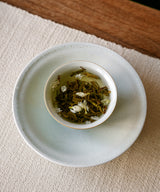
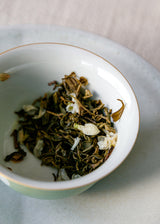
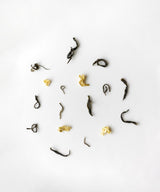
As potent as this tea is, it is also very pretty, both in taste and appearance. The white flowers remain speckled throughout the darkened green tea leaves. The soft, milky mouthfeel of this year's harvest delivers an incredible amount of flavour and aroma. When we wonder why Jasmine Tea is as cherished as it is around the world, we can look to this one for an answer.